
研究概要
Research Overview
Moving beyond traditional experiment-driven approaches, our laboratory is dedicated to developing novel methodology for predicting chemical reactivity through
the integration of computational chemistry and machine learning (AI).
Mirroring the process of formulating a recipe prior to cooking,
we utilize computational power to screen and identify unprecedented, innovative materials with unparalleled speed and precision.
Through these efforts, we aim to achieve data-driven material design and synthesis.
研究テーマ
Research Topics
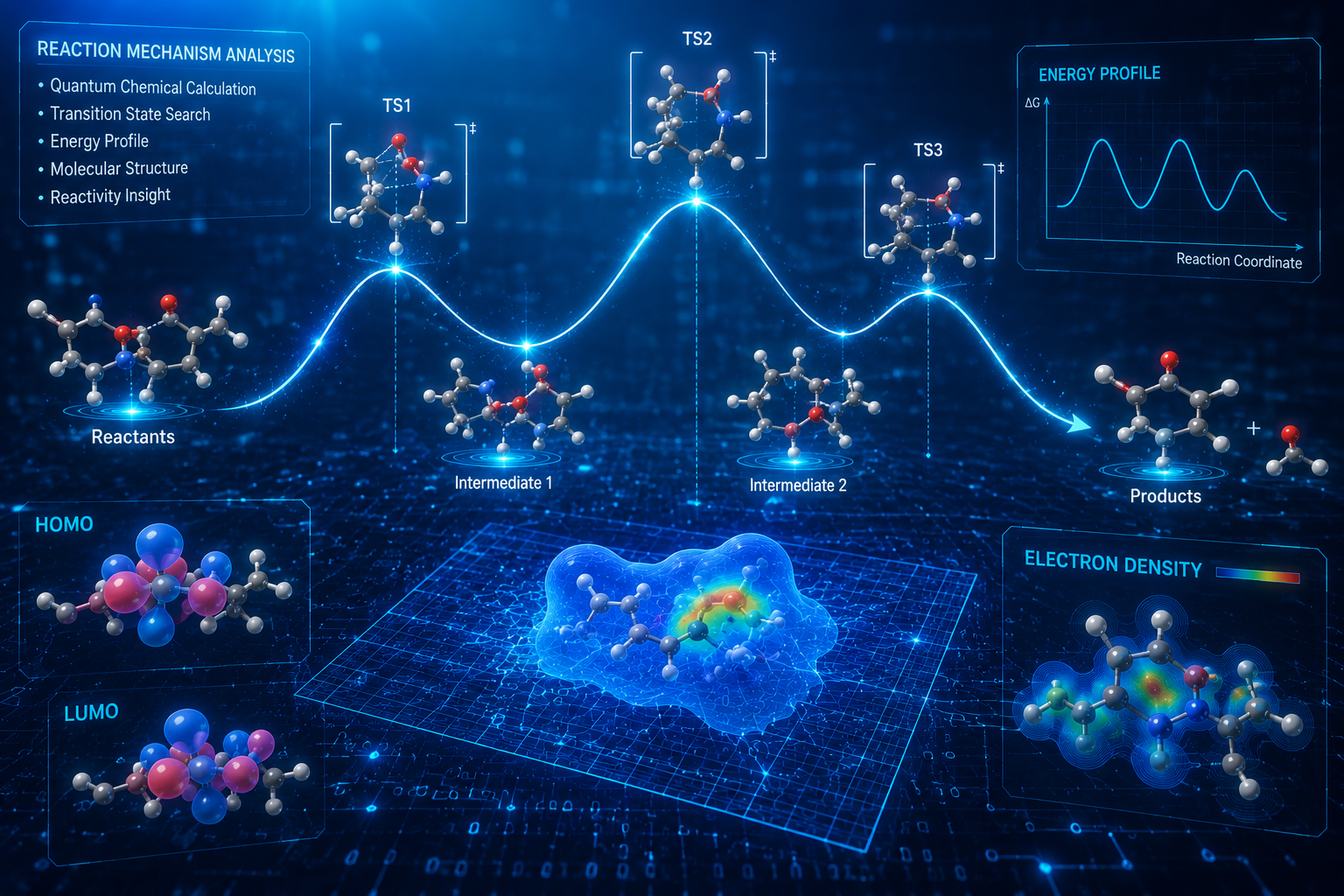

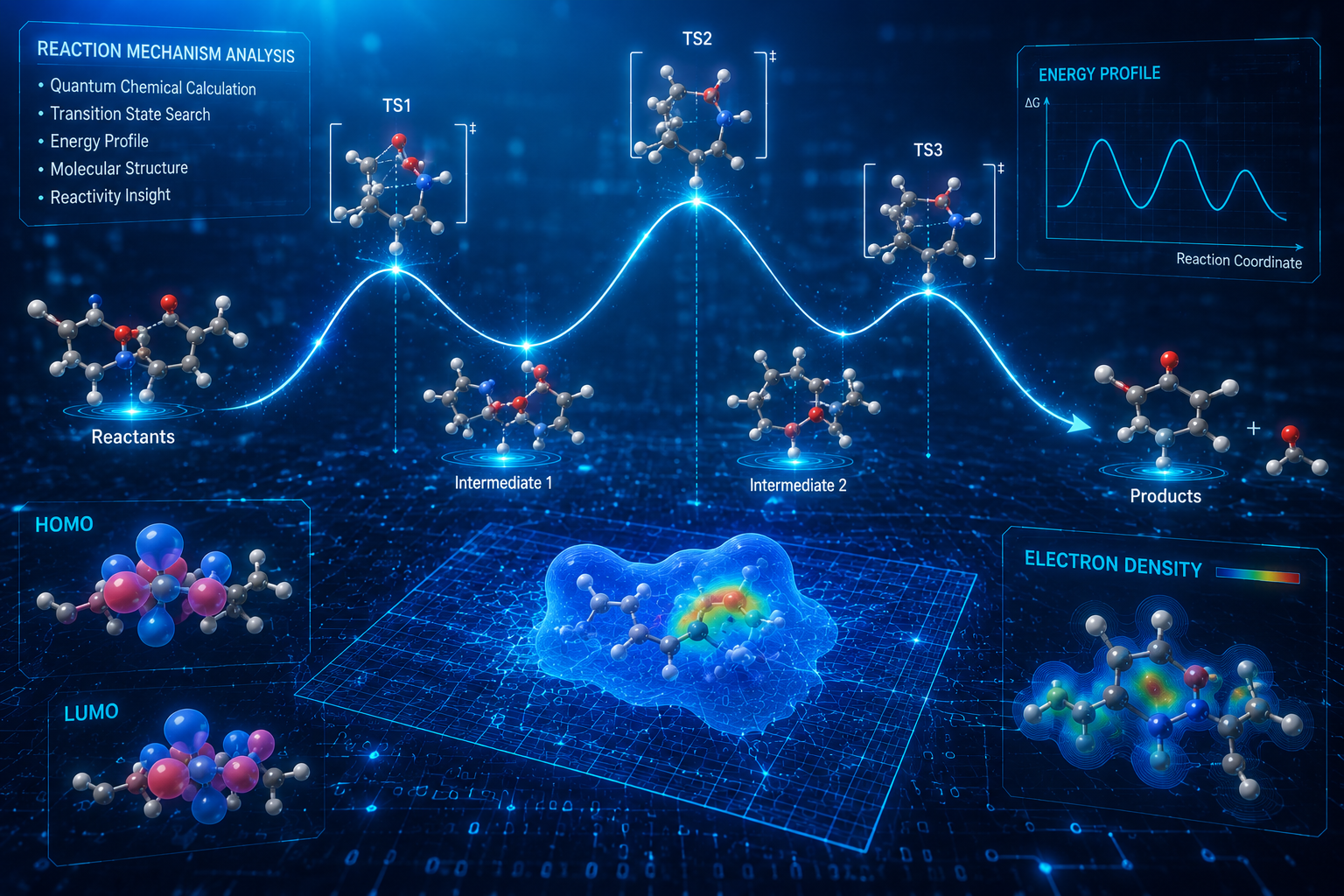
Reaction Mechanism Analysis via Quantum Chemical Calculations
-
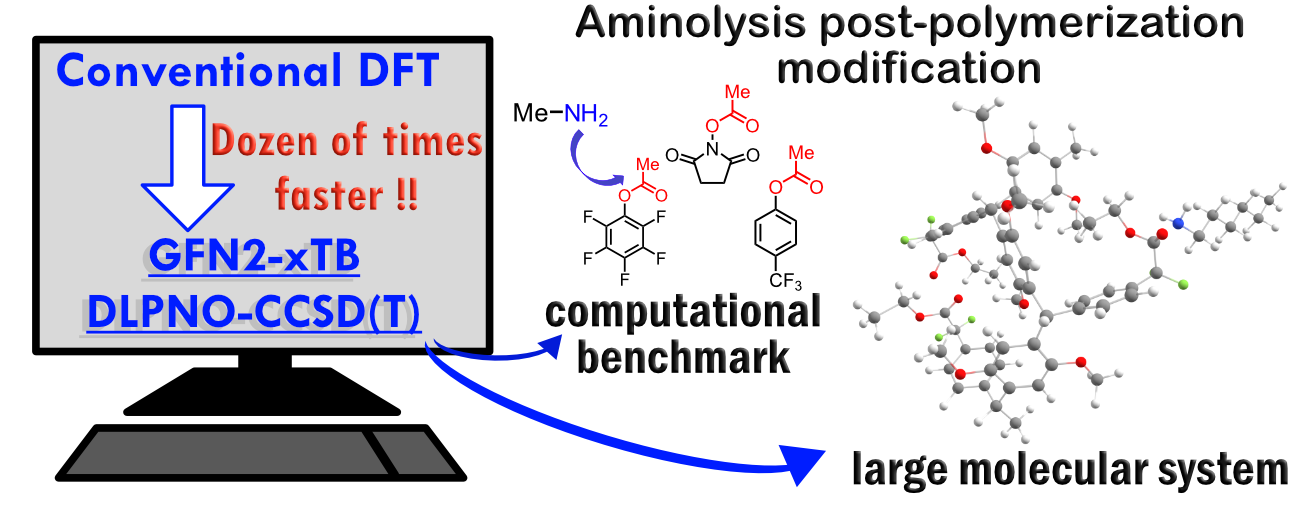
Toward the concrete practice of data-driven material design, we are focusing our research on "polymer reactions" are a type of post-polymerization modification method. Although polymer reactions represent an excellent approach that allows the addition of various properties after synthesizing the backbone polymer, they suffer from the challenge that identifying optimal conditions is extremely difficult due to the complex variations in reaction behavior caused by molecular structures and the surrounding environment.
To address this challenge, we successfully simulated the chemical behavior in the one of the polymer reactions via quantum chemical calculations, elucidating its reaction mechanism at the molecular and atomic levels with high speed. The computational approach established in this study demonstrates that even for complex organic chemical reactions, their reactivity can be predicted and evaluated beforehand in a high-throughput manner.
Matsubara, K.; Chou, L.C.; Amii, H.; Kakuchi, R.*, Molecular Systems Design & Engineering, 2022, 7, 1263–1276
Kakuchi, R.*; Matsubara, K.; Fukasawa, K.; Amii, H.*, Macromolecules, 2021, 54(13), 6204-6213.
Material Synthesis & Reactivity Prediction / Evaluation via Machine Learning

-
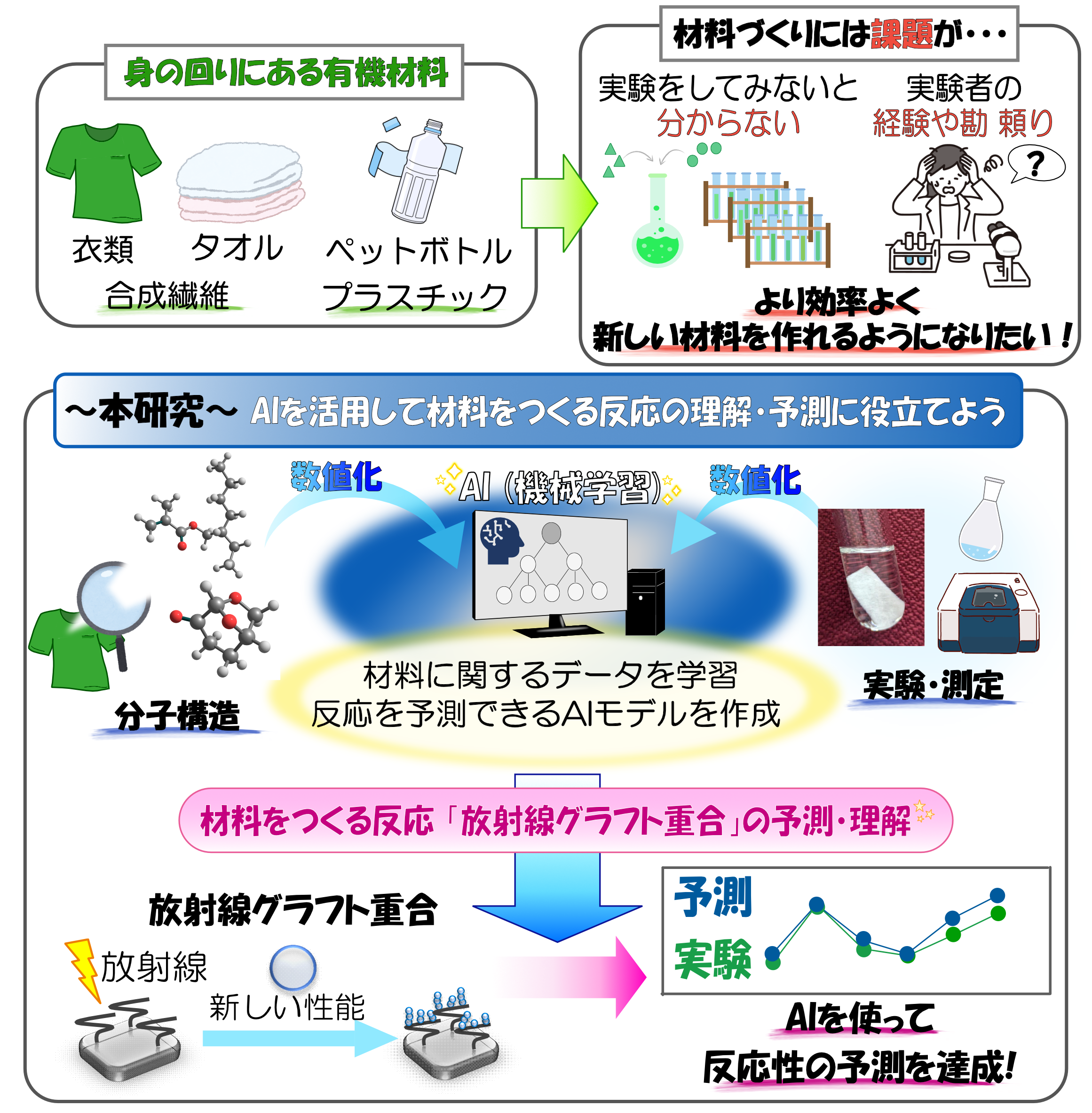
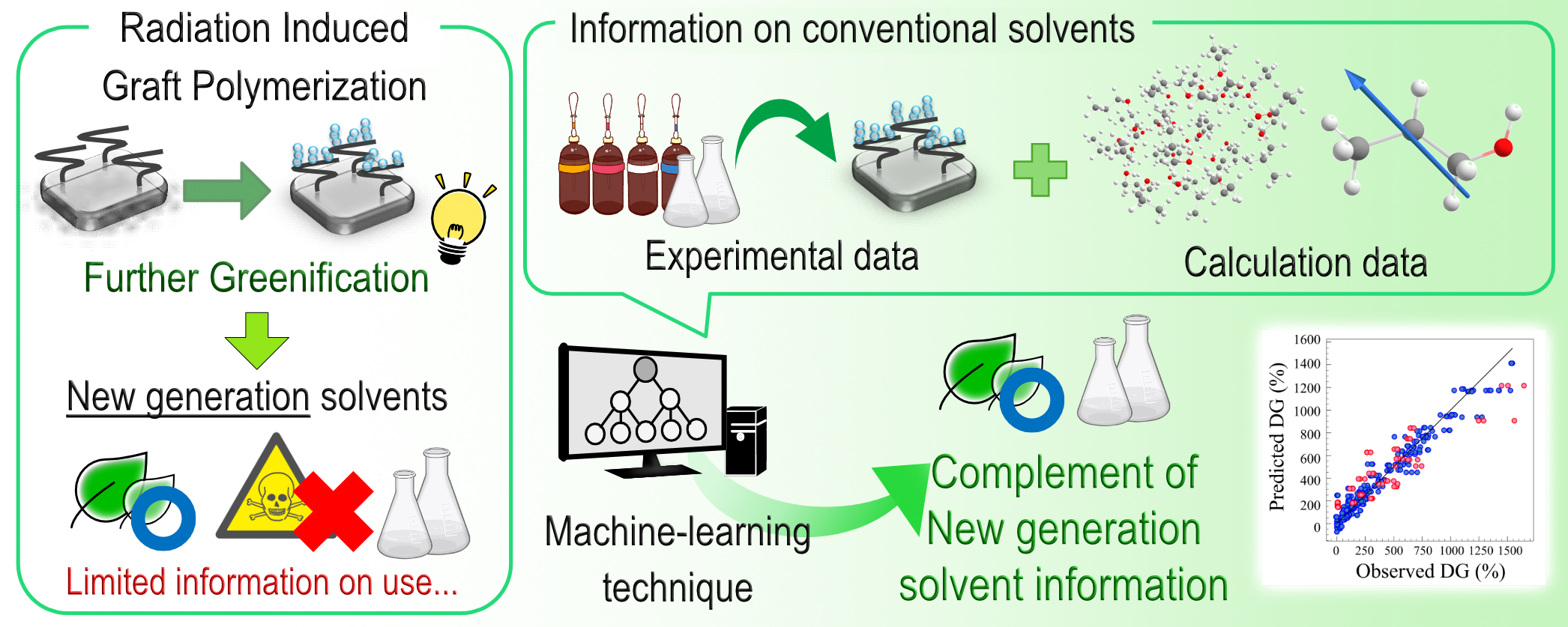
In pursuit of a carbon-neutral society, developing eco-friendly organic materials is urgent. However, predicting their reactivity is highly challenging due to complex factors like steric hindrance and solvent effects, leading to high development costs.
To address this, our research combines computational chemistry and machine learning to predict reactivity for various organic reactions. By integrating quantum chemically calculated physicochemical parameters into machine learning models, we quantify and predict material reactivity, aiming to realize an efficient, data-driven material design process.
For more details, please refer to the following papers:
Matsubara, K.; Takahashi, K.*; Matsuda, T.; Ueki, Y.; Seko, N; Kakuchi, R.*, ChemPlusChem, 2024, 89, e202300480.
Matsubara, K.; Nirazuka, T.; Takahashi, K.*; Matsuda, T.; Kuroiwa, M.; Omichi, M.; Seko, N.*; Kakuchi, R.*, Mater. Today chem. 2025, 45, 102610.